Body line after weight loss: Fat distribution and elasticity.
The same 3 kg, different outcomes — fat and firmness read together.
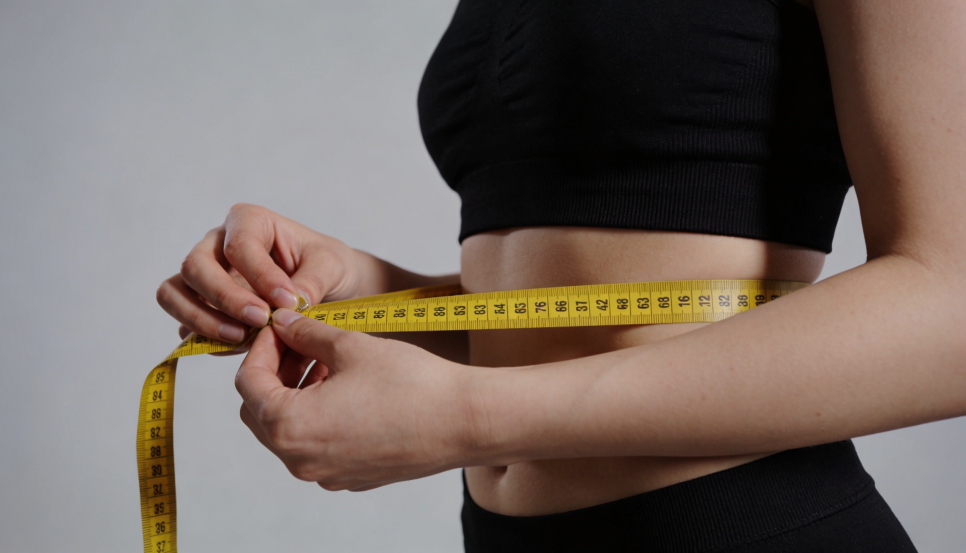
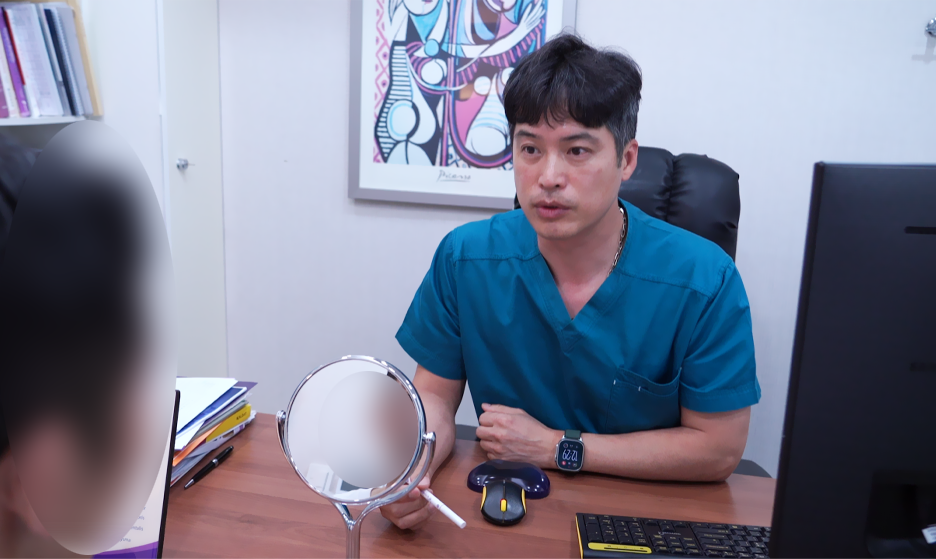
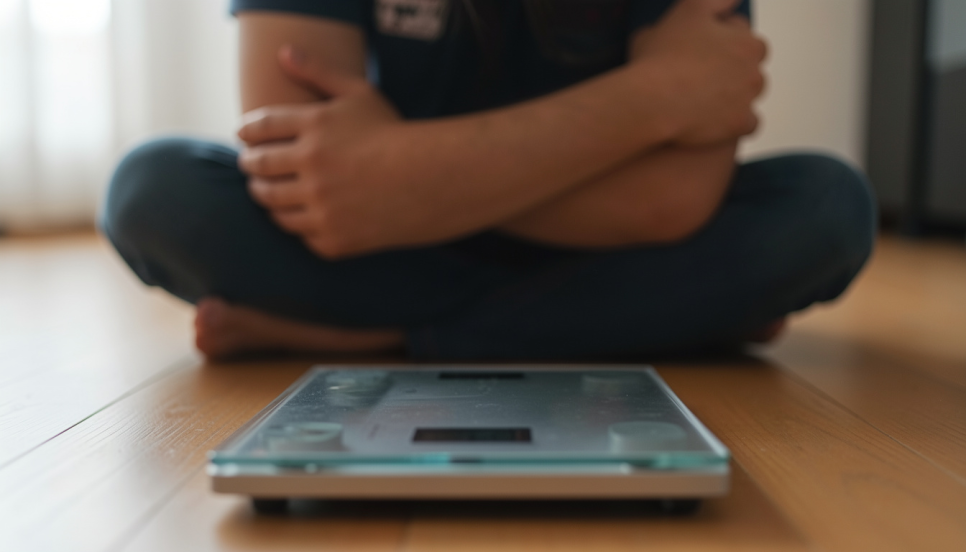
Many people visit our Consultation Room feeling that while the number on the scale has clearly gone down, there isn't much difference when they look in the mirror. In such cases, before looking at weight, I first look at where fat remains. Today, I will explain why we focus on body line rather than weight for management, and what approaches are available for fat in specific areas.
Why Do Results Differ Even When Losing the Same 3kg?
Even when losing the same 3kg, some people see their facial contours and waistline become more defined, while others feel almost no difference in their silhouette compared to their weight change. This difference is due to the unique interplay of where fat accumulates, muscle mass, edema, and lifestyle habits.
If fat is concentrated in specific areas like the abdomen, flanks, or thighs, those lines may not change much even if weight decreases. That's why, recently, the trend has shifted to looking at how the body shape changes in specific areas, rather than just a single number.
Obesity is not simply a problem caused by overeating; it's closer to a process of looking at where and in what form fat accumulates in the body.
The Traces Lifestyle Habits Leave on Fat Distribution
Where fat accumulates is quite closely linked to lifestyle patterns. Prolonged sitting can lead to sluggish blood circulation and lymphatic flow, sometimes resulting in lower body edema. Here are some common connections:
- Prolonged sitting: Poor lower body circulation, tendency for edema
- Late-night snacks and irregular meals: Associated with abdominal fat accumulation
- Stress and lack of sleep: Hormonal changes can make appetite control difficult
Therefore, obesity management is approached more as a concept of how to restore body shape balance, rather than "losing weight." If you'd like to explore this further, we recommend reading the article on what to check before weight.
Doesn't Fat Just Disappear with Exercise?
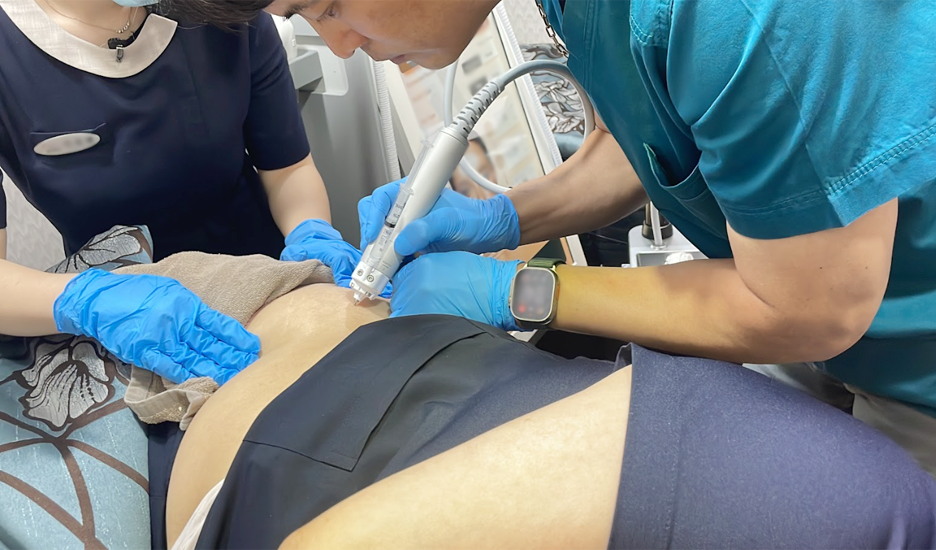
This is a question many people wonder about. Exercise and diet control are fundamental. However, fat that has been accumulated for a long time in areas like the lower abdomen, love handles, or inner thighs may show slower changes due to blood flow and the characteristics of fat cells.
In such cases, obesity management devices using methods like RF, ultrasound, or cooling may be used as an auxiliary measure. The principle is simpler than you might think. It's easy to understand if you compare it to gradually softening hardened butter, or selectively refining only specific parts.
How Do Different Methods Vary?
In the Consultation Room, some people believe that "strong stimulation is always better," but each method has a different goal. Here's a comparison of typical approaches in a table:
It's important to determine the direction after checking skin thickness, fat distribution, and elasticity together. If you're curious about the cooling method, referring to Cool Shaping information will make the picture clearer. For methods focused on circulation and edema assistance, please refer to Endermologie Nemesis RF information.
If you have any questions, feel free to chat with us for a consultation now [blocked]. Costs vary depending on the area and condition, so we will provide guidance after a consultation.
We Look at Elasticity as Much as Fat
In body line management, not only the amount of fat but also the presence of skin sagging is important. This is because if weight decreases but the skin loses elasticity, the line can actually appear uneven. Therefore, fat reduction and elasticity management are often considered together.
However, there's one point I definitely want to emphasize here.
Obesity management is not a concept where all body shapes change with a single treatment. Fat cell characteristics and lifestyle habits continue to have an impact.
If late-night snacks, alcohol consumption, and lack of sleep are repeated, it can be difficult to maintain the post-treatment state. Conversely, an excessively low-calorie diet can lead to muscle loss, requiring a balanced approach. More details on strategies for weight loss based on body type are included in the article on weight loss strategies by body type.
What is the Order of Procedure?
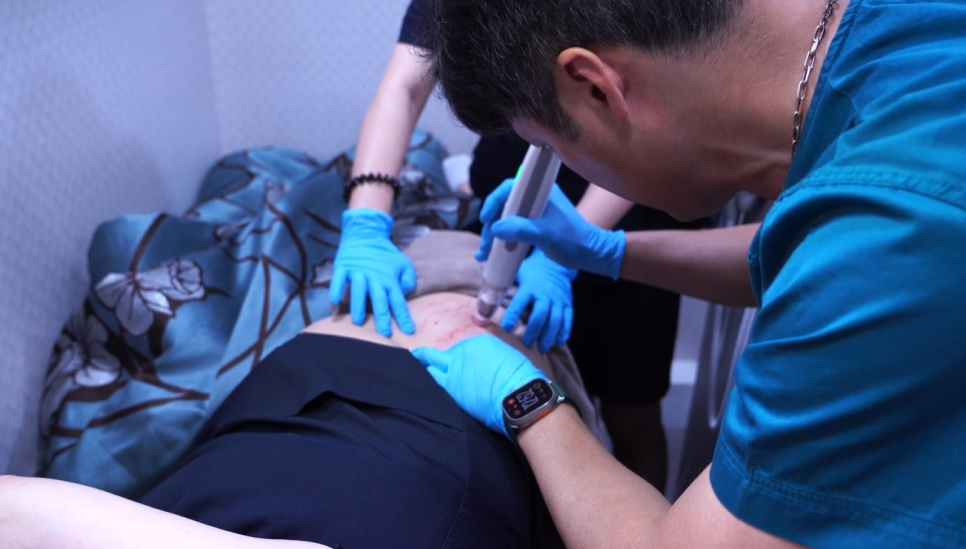
The process itself begins with body shape analysis. We check not just simple weight, but also abdominal circumference, fat distribution, presence of edema, and skin elasticity. Afterward, we determine the target area and adjust the energy intensity and direction.
During the treatment, many people experience a warm or heavy sensation, and temporary redness or heat may occur afterward. After treatment, hydration and light activity can help maintain circulation. Combining protein intake with strength training is also reported to help maintain the body line. Since there can be individual differences, it's best to adjust according to your condition.
Ultimately, the Standard is Balance, Not Numbers
Even at the same weight, the impression can be completely different depending on body shape balance and fat distribution. If the waistline or side profile is refined, clothes may fit differently even at the same weight, and if edema in specific areas decreases, the body may feel lighter. That's why, during consultations, I first ask "what silhouette do you want to create and maintain?" rather than "how many kilograms should I lose?"
If you want to find out which method suits your fat distribution and elasticity, please feel free to ask by clicking Chat Consultation to find your direction [blocked].
This article was reviewed and refined by Lead Director Park Min-soo (7th President of the Korean Laser Dermatology and Hair Society, Adjunct Professor at Hanyang University College of Medicine) and Lead Director Lee Yu-seok (20 years of clinical experience, Adjunct Professor at Hanyang University College of Medicine). The last review date was 2026-07-27.