
Acne is gone, but scars remain: a discussion from the consultation room.
Why scars do not fill in on their own, and how shape guides the approach.
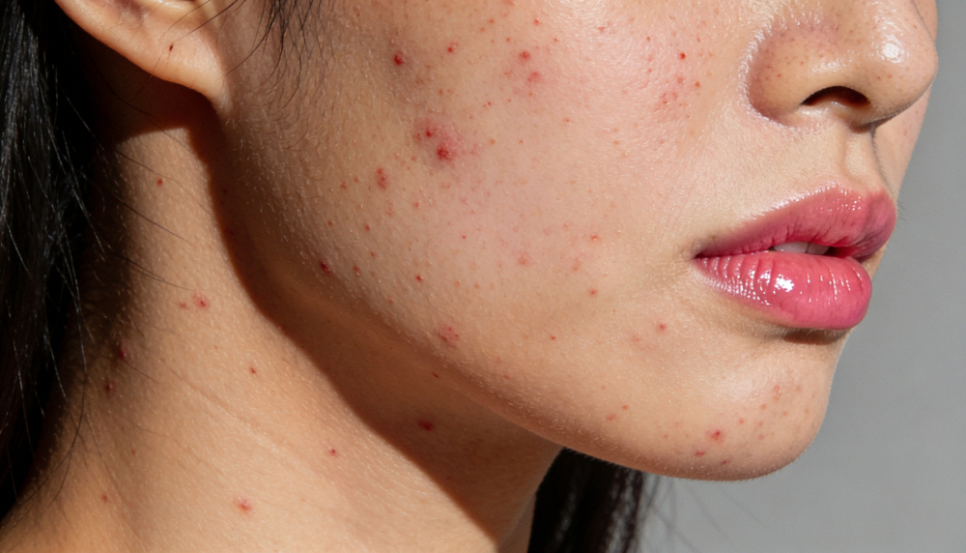
"My acne is all gone, so why are the marks still there?" This is a question we hear very often in the Consultation Room. Many people live with the lingering traces on their skin even after the acne itself has subsided.
When Teenage Acne Follows You into Adulthood
When we see patients in the Consultation Room whose severe acne from their student days has remained on their skin even after becoming adults, there are aspects that are difficult to explain as mere skin troubles. Many say that makeup doesn't cover it smoothly, and that it can even appear more prominent depending on the lighting or angle.
Therefore, there's something I want to point out first. Acne scars are different in nature from pigmentation marks. Unlike brown marks that fade over time, scars are closer to a state where the internal structure of the skin itself has changed.
Why Don't Scars Fill In On Their Own?
When sebum and dead skin cells block pores and inflammation repeatedly occurs within them, surrounding tissues can also be affected. If the collagen tissue that supports the skin collapses during this process, the surface heals in a sunken form.
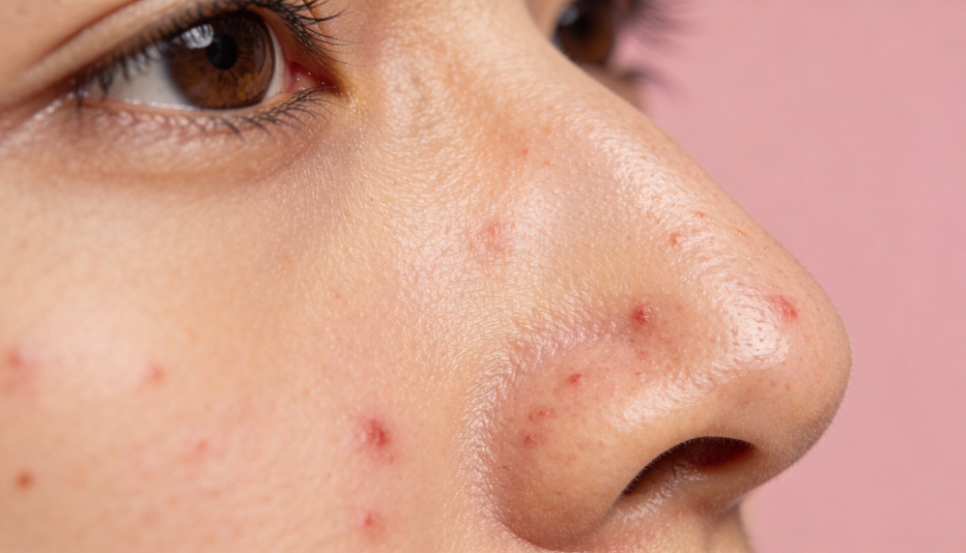
If you press a smooth sponge deeply with your fingernail and then release it, it doesn't fully return to its original shape. The principle of scar formation is similar to this.
If manual extractions were repeated or inflammation persisted for a long time, the regeneration process can proceed irregularly, leaving deeper and wider marks. Therefore, scar management approaches the issue not as "shaving off the surface," but rather as "reorganizing the collapsed skin structure." If you are concerned about recurring inflammation, it may be helpful to also refer to Pyeongtaek Acne: Addressing Scars and Pores Together.
"Will a single laser treatment make them fill in immediately?"
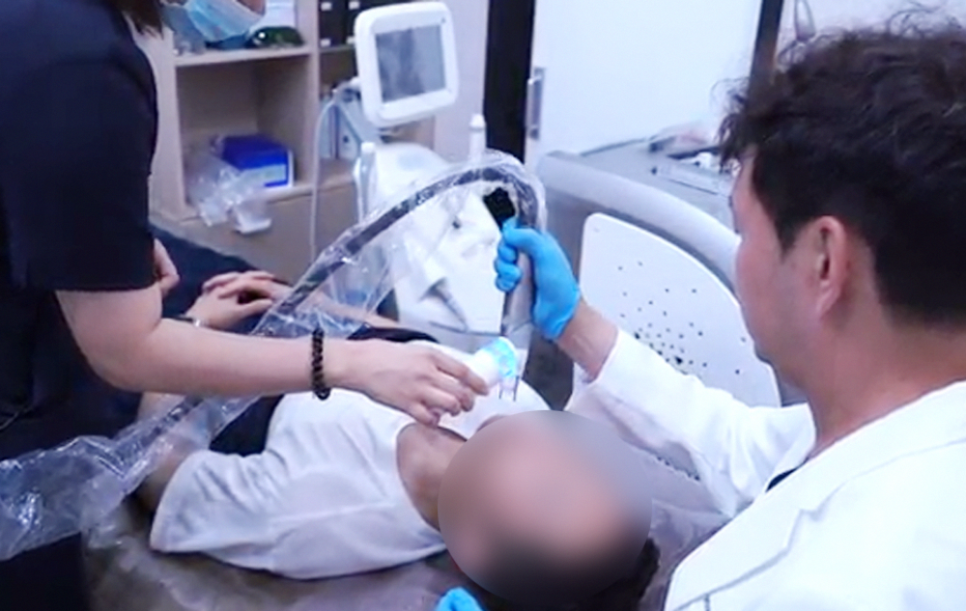
Many people ask this. To be frank, acne scar treatment is closer to a process of slowly inducing regenerative responses within the skin rather than an immediate change. Typically, the following methods are used:
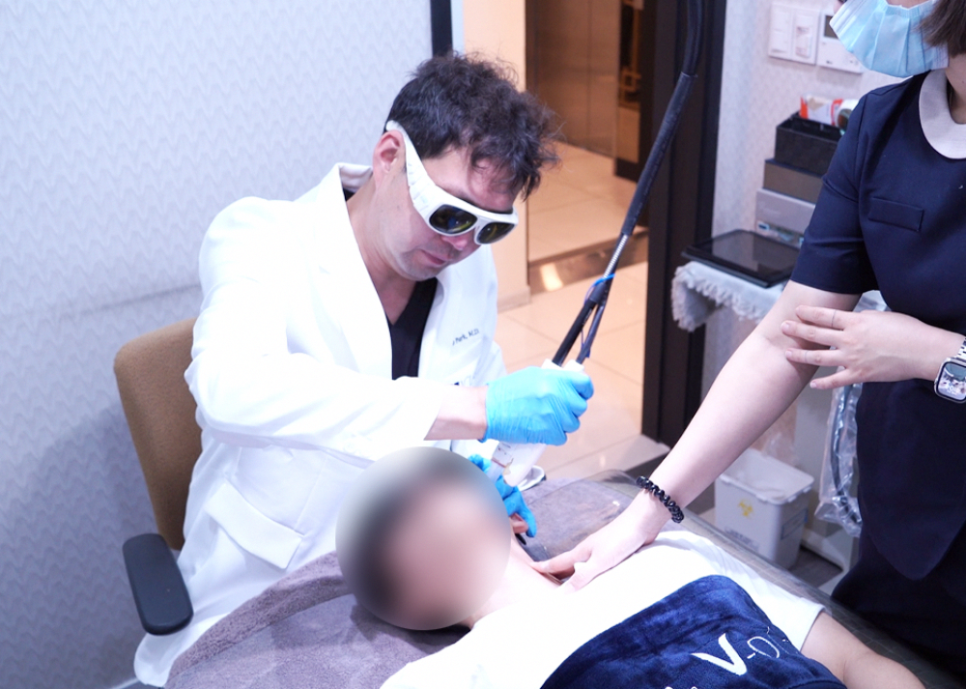
- Fractional Laser: Creates multiple microscopic thermal columns on the skin's surface, stimulating the damaged areas in a dot pattern. The skin perceives this as an injury, inducing the production of new collagen.
- RF Microneedling: Fine needles penetrate to the dermal layer and deliver radiofrequency energy to induce regenerative responses in the deeper layers. Its characteristic is that it can stimulate the inside while minimizing surface damage. If you are curious about the principles of different devices, you can learn more in RF Microneedling Procedure Guide.
- Subcision: This method releases fibrous adhesions that pull the skin down beneath depressed scars. It's easy to understand if you imagine detaching a tent ceiling that is pressed down from below.
If you have any questions, you are welcome to Ask us comfortably via chat now [blocked].
Why We Classify Scar Types First
In the Consultation Room, even with the same acne scars, their forms vary. The combination of treatments considered changes depending on whether they are narrow and deep, angular, or gently spread out. Therefore, rather than looking for "one good laser," we first recommend the process of subdividing what form your current scars take.
Recently, depending on the skin condition, regenerative treatments or collagen induction treatments are sometimes performed together. The reason is simple: the core of scar treatment is not in strong stimulation, but in how stably the recovery response can be induced. If you are curious about scar treatment in general, we recommend referring to Acne Treatment Guide and Scar Treatment Guide.
Important Limitations and Process to Know
To be honest, there are clear limitations. If the scars are old and deep, it may be difficult to expect significant changes with just one treatment. Depending on skin type, temporary redness or pigmentation changes may appear after the procedure, and there can be individual differences.
Especially if the skin barrier is weak and strong treatments are repeated, there is a possibility of cumulative irritation. Therefore, rather than unconditionally increasing the intensity, I tend to proceed while observing the skin's recovery speed.
The actual flow usually proceeds as follows:
- Skin diagnosis to check scar depth and extent, sebum condition, and presence of current inflammation
- Application of anesthetic cream if necessary
- Treatment such as laser, radiofrequency, or adhesion release tailored to the scar type
- Observation of recovery as redness or heat subsides
The procedure time varies depending on the area, but it often takes around tens of minutes, and the heat sensation that appears after the procedure usually subsides gradually over time. Costs vary depending on the scar type and treatment combination, so we will inform you after consultation.
A Scene from the Consultation Room
For example, there was a case where a patient came in because of uneven indentations on their cheeks after repeated inflammatory acne, and they were particularly bothered by their skin texture under certain lighting. In such cases, we approach it by using a combination of treatments tailored to the scar type to make the skin texture appear smoother little by little.
However, there's one thing I hope you'll remember. Acne scar treatment is closer to "a process of inducing improvement to make them less prominent" rather than "a treatment that erases them." Therefore, setting realistic goals together is paramount.
Lifestyle Management to Aid Recovery

Skin undergoing regeneration is sensitive to external stimuli. I've summarized some important points to pay attention to at home.
- Be more diligent than usual with Sun Protection
- Temporarily postpone strong friction or scrub products
- Maintain sufficient moisturizing care
- Reduce habits of repeatedly touching the skin with hands or extracting new acne
Ultimately, acne scars are not just a problem of the skin surface, but closer to a state where the collapsed structure after inflammation and the traces of recovery remain together. Rather than expecting rapid changes, consistently creating an environment for the skin to recover often leads to more honest results. Because skin changes more slowly than you might think, but its reactions are just as honest.
If you find it difficult to gauge what type of scar you have, you can comfortably ask us using Ask via chat consultation now [blocked].
This article was reviewed and refined by Lead Directors Park Min-soo (7th President of the Korean Society for Laser Dermatology and Hair, Adjunct Professor at Hanyang University College of Medicine) and Lead Director Lee Yu-seok (Vice President of the Korean Society for Laser Dermatology and Hair, 20 years of clinical experience). Last reviewed 2026-07-27.