
Weight loss methods by body type and body composition analysis
Why body composition, not weight, decides the approach.
When the seasons change, the number of people who visit our Consultation Room saying, "This time, I'm really going to lose weight," increases significantly. However, when we talk to them, their goal is usually focused on just one number on the scale. This is where the difference lies: some people see changes in their bodies with the same diet and exercise, while others stay in the same place.
The causes of weight gain are not as simple as you might think. For some, visceral fat in the abdomen is the key issue, while for others, fat accumulates mainly in the lower body. It's also not uncommon for people to have a low basal metabolic rate due to a small amount of muscle mass.
That's why, these days, strategies for weight loss that consider body shape, fat distribution, and muscle mass together are discussed more often than simply reducing the number on the scale. Today, I'd like to go over what I repeatedly explain in Weight Management & Body Contouring consultations: why the approach needs to differ depending on body type.
We Look at Body Composition, Not Weight
The core of dieting is not weight loss, but rather improving body composition.
Even if you lose the same 5kg, the results will be completely different depending on whether you lost fat or muscle. If you lost weight but also lost muscle, your basal metabolic rate might decrease, making it easier to regain weight later.
Conversely, if body fat decreases and muscle mass is maintained, even if there isn't a significant change in weight, your body's silhouette will look much more refined. This is why Weight Management & Body Contouring clinics prioritize body composition analysis over simple weight. We check body fat percentage, muscle mass, and abdominal fat distribution together to determine the direction of your weight loss.
Why Should the Method Differ for Each Person?
To use a simple analogy, dieting is like organizing a house. In some houses, the closet is the problem; in others, it's the storage room; and in still others, it's the living room. If you apply the exact same organizing method to every house, efficiency is bound to decrease. The same applies to our bodies.
Because the areas where fat accumulates and metabolic states differ for each person, if the starting point is different, the method also needs to be different. Here's a summary of common types:
The reason for categorizing types like this is that even with the same weight, the management approach can differ. If you're curious about body-type-specific approaches, you can first check the big picture in our Weight Management & Body Contouring Treatment Guide.
What We Actually Check in Consultations
In Weight Management & Body Contouring clinics, we use body composition analysis equipment to measure not only weight but also muscle mass and body fat mass, and if necessary, we also conduct a lifestyle and eating habit assessment. Afterward, we comprehensively review the following, tailored to your individual condition:
- Diet control and activity level plan
- Application of medication (for appetite control, maintaining satiety, improving energy metabolism)
- Utilization of body contouring equipment
Medication application may vary depending on your individual health status and diagnosis results. Body contouring equipment using radiofrequency, ultrasound, or cooling methods may also be used to deliver physical energy to the fat layer to assist with management, but it's more accurate to understand this as a supplementary role rather than for weight loss itself.
If you have any questions, please feel free to Chat with us now for a consultation [blocked]. Costs will be provided during the consultation after your condition has been assessed.
Each Technology Has Different Characteristics
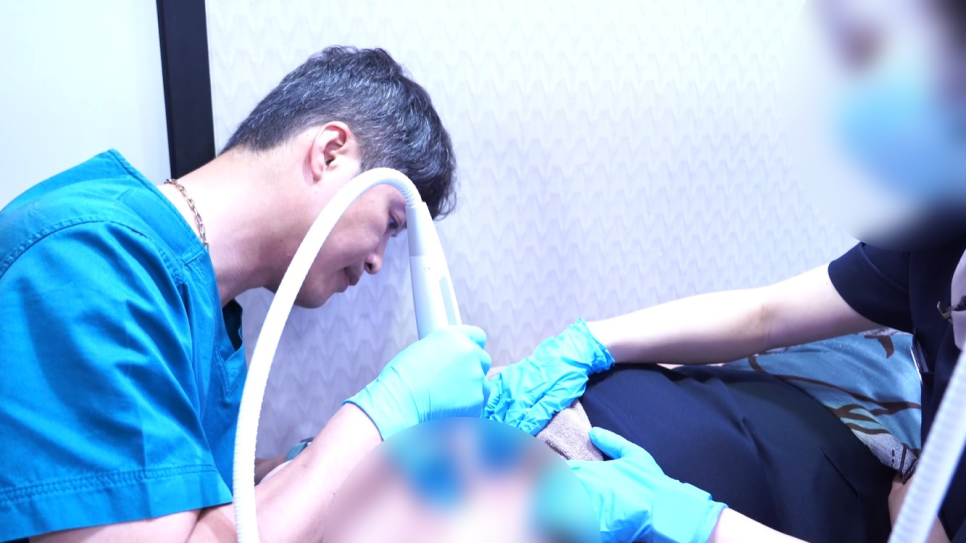
Let's look a little deeper into the technologies used. Body composition analysis equipment helps objectively confirm your current state by showing muscle mass and body fat mass as numerical values. Radiofrequency-based equipment may use a method that delivers thermal energy to tissues to induce changes in the fat layer and skin tissue.
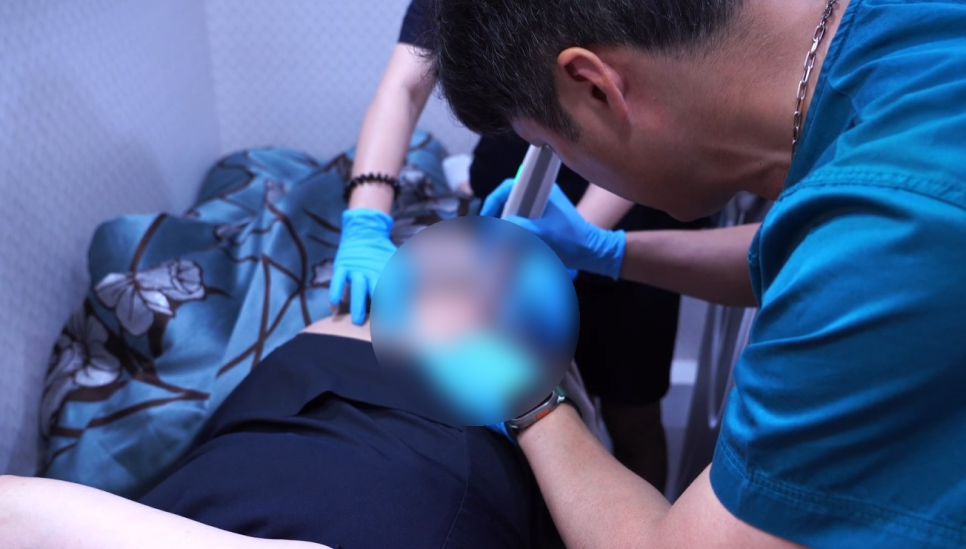
Focused ultrasound technology is often explained as using the principle of concentrating energy at a specific depth, while cooling technology utilizes the fact that fat cells are relatively sensitive to temperature changes. Each technology has different application areas and characteristics, so rather than saying one piece of equipment is unconditionally better, it's important to see if it suits your current body shape and goals. If you're curious about injection methods, the Fat Dissolving Injection Guide can also be helpful.
Patients also clearly experience benefits. First, they gain an objective understanding of their own body shape. Instead of vaguely thinking, "I need to lose weight," they specifically identify whether "abdominal fat reduction is the priority" or "maintaining muscle mass is necessary." Another advantage is that a plan can be made to minimize muscle loss during the weight loss process.
The Reason It's Not a One-Time Event
Many people ask, "Will I lose weight with just one procedure?" To put it simply, weight management is difficult to solve with a single method alone. While equipment or medication can help, improving eating habits and activity levels must go hand in hand.
In particular, lack of sleep, frequent alcohol consumption, and stress can affect weight management, making lifestyle habit management important. In the Consultation Room, we see a significant difference in progress between those who adhere to these aspects and those who don't, even with the same program. Therefore, we recommend combining aerobic exercise, strength training, and nutritional management.
The general flow of progress is roughly as follows:
Of course, this process can vary greatly depending on individual conditions.
For Example, in These Cases
Let's consider a 30-something office worker who sits for long hours. Their weight isn't significantly high, but they have increased abdominal fat and insufficient muscle mass. In such cases, it's better to aim for maintaining muscle mass and reducing abdominal fat rather than simple weight loss. Conversely, if the concern is lower body fat accumulation, an approach that considers the specific body shape characteristics of that area would be necessary.
For the first few days, it's advisable to maintain Adequate water intake and avoid excessive alcohol consumption and binge eating. After observing your body's condition for about 1-2 weeks while maintaining regular eating habits, we recommend a flow that combines strength and aerobic exercise to maintain a refined body shape. For a similar concern, you might find it easier to understand by also reading A Story About What to Check Before Weight.
Ultimately, dieting is less about the process of losing weight and more about accurately understanding your body shape and developing a strategy that suits it. I believe the first step begins not with indiscriminate weight loss, but with accurately understanding your current body condition.
If you're curious about which body type you're closer to, please feel free to inquire via chat consultation [blocked]. After checking your condition, we will help you set a direction together.
This article was reviewed and refined by Lead Directors Park Min-soo (7th President of the Korean Academy of Laser Dermatology and Hair, Adjunct Professor at Hanyang University College of Medicine) and Lee Yu-seok (Vice President of the Korean Academy of Laser Dermatology and Hair, 20 years of clinical experience). Last reviewed 2026-07-27.